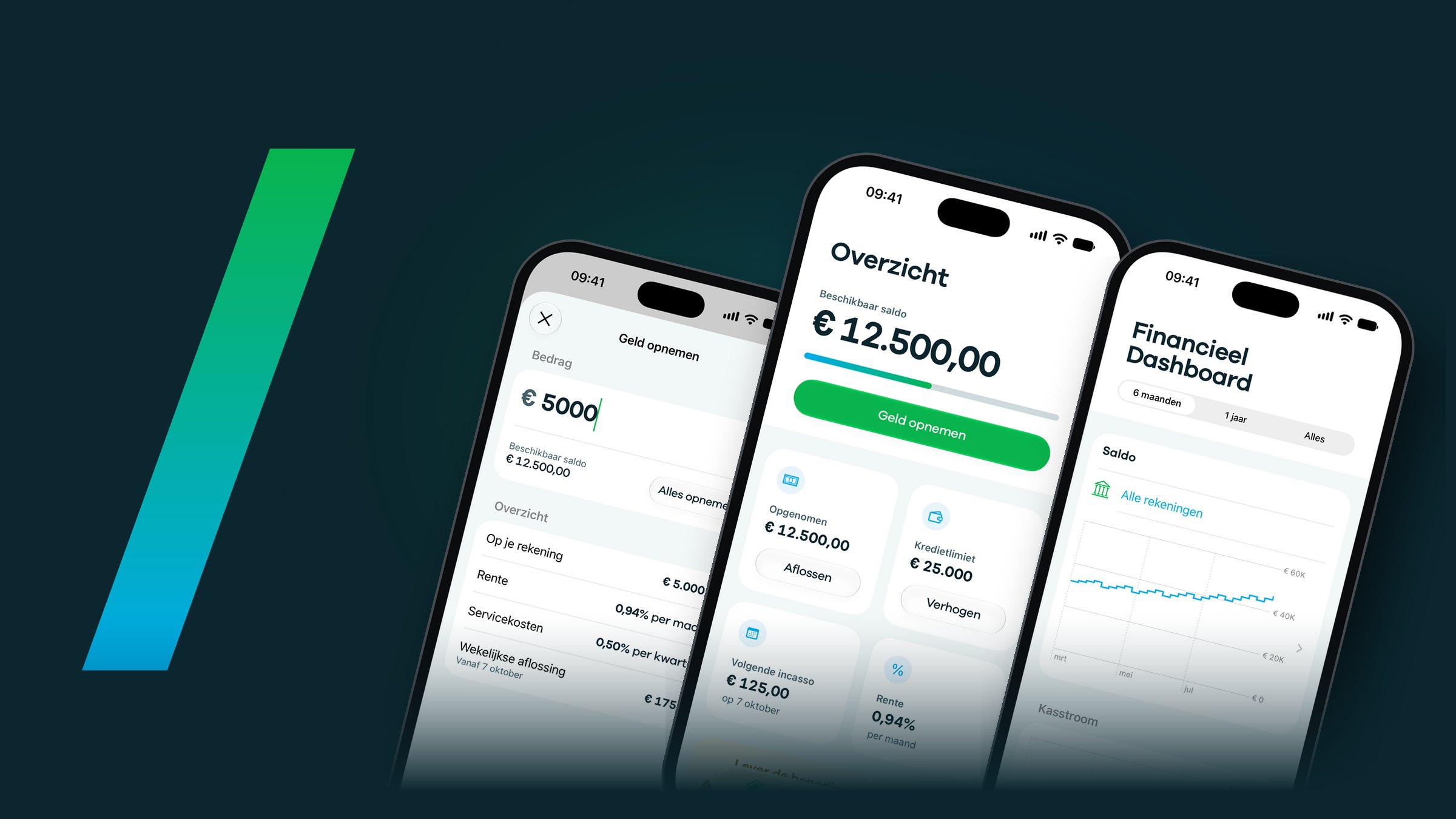
Join us in building a fintech company that provides fast and easy access to credit for small and medium sized businesses — like a bank, but without the white collars. You’ll work on software wiring millions of euros, every day, to our customers.
See our open positions“We are a fintech company, and we need a mobile app”. With that mantra, we set out to build a mobile app 4 years ago. Little did we know what kind of commitment that turned out to be. This is a story of us struggling with mobile app development, and how AI helped us to move forward at the speed of light.
It helps to know that in this story Floryn is still very much a scale-up. We don’t have a dedicated team of app developers, but instead we have to make it work with the team that is already in place (and as a full-stack software engineer, this is awesome).
Our back-end runs fully on Rails, and our customer-facing front-end was built in React. Also, all our code was still hand-written at this point. So, when looking into the mobile apps, we ended up with React Native. The promise of writing the app once and shipping it everywhere sounded perfect. We wouldn’t need to learn all the intricacies of both iOS and Android, but could instead rely on the abstraction layer of React Native.
Things started out great: we managed to get the app live within a 6-week project cycle (hello Shape Up)! A very basic version of course, but we would build more features later on, in new cycles. As time went on, we started to notice a few things.
Dependencies, a lot of dependencies. Every time we wanted to work on the mobile app, we first had to fight our way through tens to hundreds of updates. Maybe a result of React Native being an NPM package, but pretty annoying nonetheless.
Related to this, always getting the app to build after all the dependency updates proved to be difficult. Opening the project in Xcode would typically result in an extended Google session for some obscure build error.
And then just knowledge about the app. At Floryn, we try to share responsibility for our code across our developers. We have knowledge sharing sessions, we do pair programming and people are always ready to review some code. With the app, we noticed that people were hesitant about picking it up. Probably because getting the initial build was already pretty involved. Add all the issues above, and it’s no wonder nobody volunteered.
All of this meant that the app was not really well maintained. We of course did our due diligence and kept the app up to date, but we didn’t add many new features. It lagged behind quite a bit with respect to our web platform. No increase requests, no additional repayments, no self-service. A real shame, because there is a lot of potential in these apps.
Cue Rails World 2026. DHH goes on stage and announces his AI euphoria, his AI delirium. He goes on to explain that their mobile apps for 37signals are now being rebuilt as native apps.
This got my attention. Rebuilding mobile apps with AI. Could we do the same? The Monday after, I started an experiment: let’s try to build our mobile apps from the ground up. Writing code is cheap with AI: let’s build an actual native app. One app in Swift for iOS, one in Kotlin for Android.
I have been working with AI for well over a year now, but sometimes it still blows my mind. Within two hours I had a fully functional app running in my iPhone simulator. Even better, apart from push notifications, it already matched the legacy app in terms of features.
So, we took things a bit further. We started to implement all the features that we had been waiting on for so long. Increase requests, self-service, repayments with iDEAL/Wero, searchable transactions… One day. One day is what it took to have this all implemented and working inside a simulator.
The rest of the week we spent on polishing the UI. While we do have a style guide, the first versions of the app still had this generic AI-generated feel to it. We don’t like that. We made good use of Impeccable to see different mockups and find a style that fits Floryn.
At this point, we also shared our progress with the rest of the company. From Sales to Client Success, to even our CEO, all were enthusiastic about this new app. But they all also had the same question: can our customers use this already?
One week to have a fully functional, good looking, fun app. What I left out so far is the work around it. All the data, all the new features: it all needs to go to and from our back-end. That means more endpoints for our app to talk to. Building a new front-end with AI is one thing, exposing data is another. While we do allow the use of AI for code generation on the back-end, we do expect our engineers to own this code. This means that all code that goes into our back-end gets reviewed by someone else.
On top of that, creating an app from scratch is pretty easy with AI. Having the full deploy pipeline in place, with proper testing and production validation, is another story.
And then the testing. Things can look great in a simulator, but they might not feel so great on an actual phone. A missing animation, a swipe gesture not recognized, all these little things that make an app a joy to use.
We spent about a month in total building, polishing, testing and publishing the app. But then, early November, the time had come. Both Apple and Google reviewed our apps, gave their thumbs up, and we pressed the button: the new apps are live!
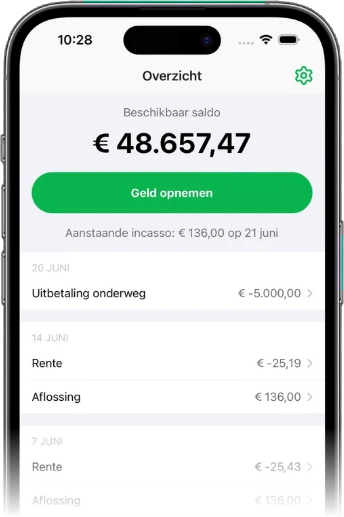
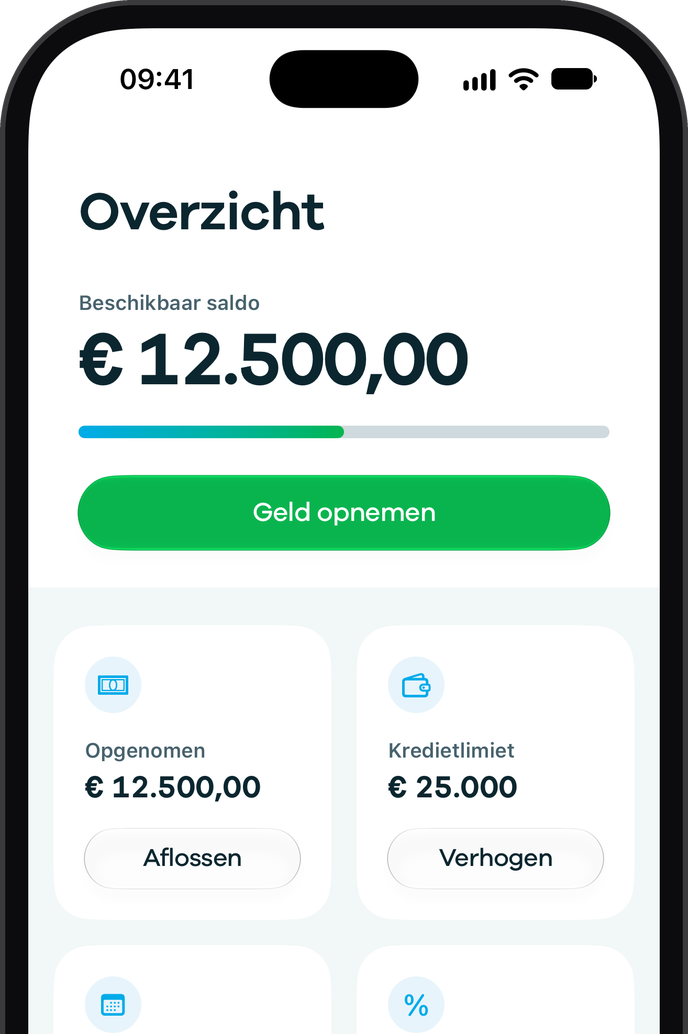
We are very pleased with the result. But even more importantly, so are our colleagues and customers! The initial reactions have been enthusiastic, and we already have developers from other teams picking up mobile development on their own.
“We are a fintech company, and we need a mobile app”. I think, after 4 years, we are finally there. Building and maintaining two native apps with a relatively small team of developers was out of the question a year ago, but with the help of AI, we managed to pull it off.
The part that I am most happy about is that our mobile apps are no longer that project that nobody wants to touch.

Floryn is a fast growing Dutch fintech, we provide loans to companies with the best customer experience and service, completely online. We use our own bespoke credit models built on banking data, supported by AI & Machine Learning.

